
With the start of rabi crop arrivals, the prices of agri commodities have declined in the past two months, raising hope that food prices will moderate in the weeks ahead.

Economists forecast the benchmark food price indicator to slip to 12 per cent in near future

Annual food inflation has picked up for the second consecutive week, with the food price index rising 17.56 per cent in the 12 months till January 23, higher than an annual rise of 17.40 percent in the previous week, data released on Thursday showed. What may, however, lift spirits a little is the fact that the prices of pulses, a major contributor to spiralling food inflation, have declined over 40 per cent from their peak, on the back of rising arrivals and imports.

In the past two years, high-end luxury watch brands have grown by 20-22 per cent, as against 7-8 per cent growth in low-end watches.

The country has generated an additional income of Rs 10,000 crore (Rs 100 billion) to Rs 12,000 crore (Rs 120 billion) annually because of its higher yield, J N Singh, joint secretary in the Union textiles ministry, told Business Standard.

The Gems & Jewellery Export Promotion Council (GJEPC), the apex body set up by the Union ministry of commerce to monitor the jewellery business overseas, says it might call for pulling out of the diamond cutting and polishing business in China.

Diamond cutting and polishing industry had laid off over 20 per cent of its skilled labour (total estimated strength is one million).
Decline in planting of cereals across the world may lead to volatile food prices next year, the Food and Agricultural Organisation (FAO) of United Nations has said in its latest report.
Owing to erratic monsoons this year, the kharif grain output is projected to fall 18 per cent to a seven-year low of 96.63 million tonnes against last year's 117.70 million tonnes.

Export orders generally begin in August and continue till October-end. Ready jewellery items are delivered within 45 days from the date of booking.

Essential items are 65 per cent costlier than last year; traders blame it on higher MSP, confusion in govt.
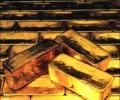
China to remain the largest market, say analysts.
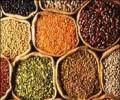
Lack of moisture in fields leads to less output.

Once bitten, twice shy, the laid-off workers, many of whom had switched to sectors like textile and agriculture, are apprehensive about returning to diamond processing. Before Diwali last year, there were about 3,000 diamond cutting and polishing units with a 600,000-strong workforce.
Investors, speculators, hedgers and consumers who sold their gold stocks to partly set off losses in the financial markets will start replenishing within six to eight months, says Ajay Mitra, managing director - Indian sub-continent, World Gold Council.
According to Ketan Shroff of Pushpak Bullions Pvt Ltd, "Traders are selling at Rs 14,900 -- 14,950 per 10 gm presently, which was Rs 100-150 lower than the landed cost." He added, "The consumer price depends upon customers' needs as some in dire need of money sell at prices lesser than Rs 14,900 per 10 gm while others attract customers through price negotiations."
Gold is back in favour with consumers shifting their focus on the precious metal on the back of moderation in prices.
Stung by the steep fall in demand for the yellow metal in the world's largest consumer nation, the World Gold Council is now falling back on the familiar marketing mantra: If customers aren't coming, go to their doorsteps. The reason for the marketing overdrive by the Indian arm of the WGC is simple: India, which used to import around 60 tonnes of gold a month till last year, has seen zero imports in the past two months because of the prevailing high prices.
The corporation, christened MCX Clearing Corporation, is likely to start functioning next month. So far, the exchange's clearing activities are controlled by an integrated clearing house which remains a function of the exchange platform.
Gold purchases by India, the world's largest importer of the metal, are down to a trickle because of high prices, prompting local traders and jewellers to reprocess scrap and jewellery to cater to rapidly falling local demand.
